Bangs change the visible frame around the eyes and forehead, but the name of the fringe tells you less than its width, density and shortest point. Two sets of curtain bangs can behave like different haircuts. When comparing bangs for round faces, look at the actual line against your features and consider how you want it to move, how much forehead you like showing and what you can manage after washing.
Look at the frame before choosing a fringe name
Start with your hair pulled loosely away from your forehead and your head upright. Notice where you would like the fringe to begin and end. A narrow section can leave more hair free at the temples; a wider section brings more of the side hair into the fringe. The width across the head is not the same as the width visible in a photograph, since curved and parted pieces can hide where the section was taken.
Hold a few ends against the forehead or try a clip-in fringe if one is available. This is a rough preview of coverage, not a promise of how a real cut will sit. Check the view with your everyday glasses, earrings and usual part. A fringe that brushes the brows can touch the top of a frame, while longer centre pieces may fall into your eyes when you look down at a screen.
Face shape cannot settle these choices by itself. Your forehead height, hairline and preferred expression of style all matter. You might want an open centre, a strong horizontal edge or a deliberately short fringe. A rounded face does not create a ban on any of them. Describe the effect you want using visible details: “I want my brows showing” or “I like some hair beside the temples” gives the stylist a clearer target than a request to hide roundness.
Choose curtain or side bangs by how they fall
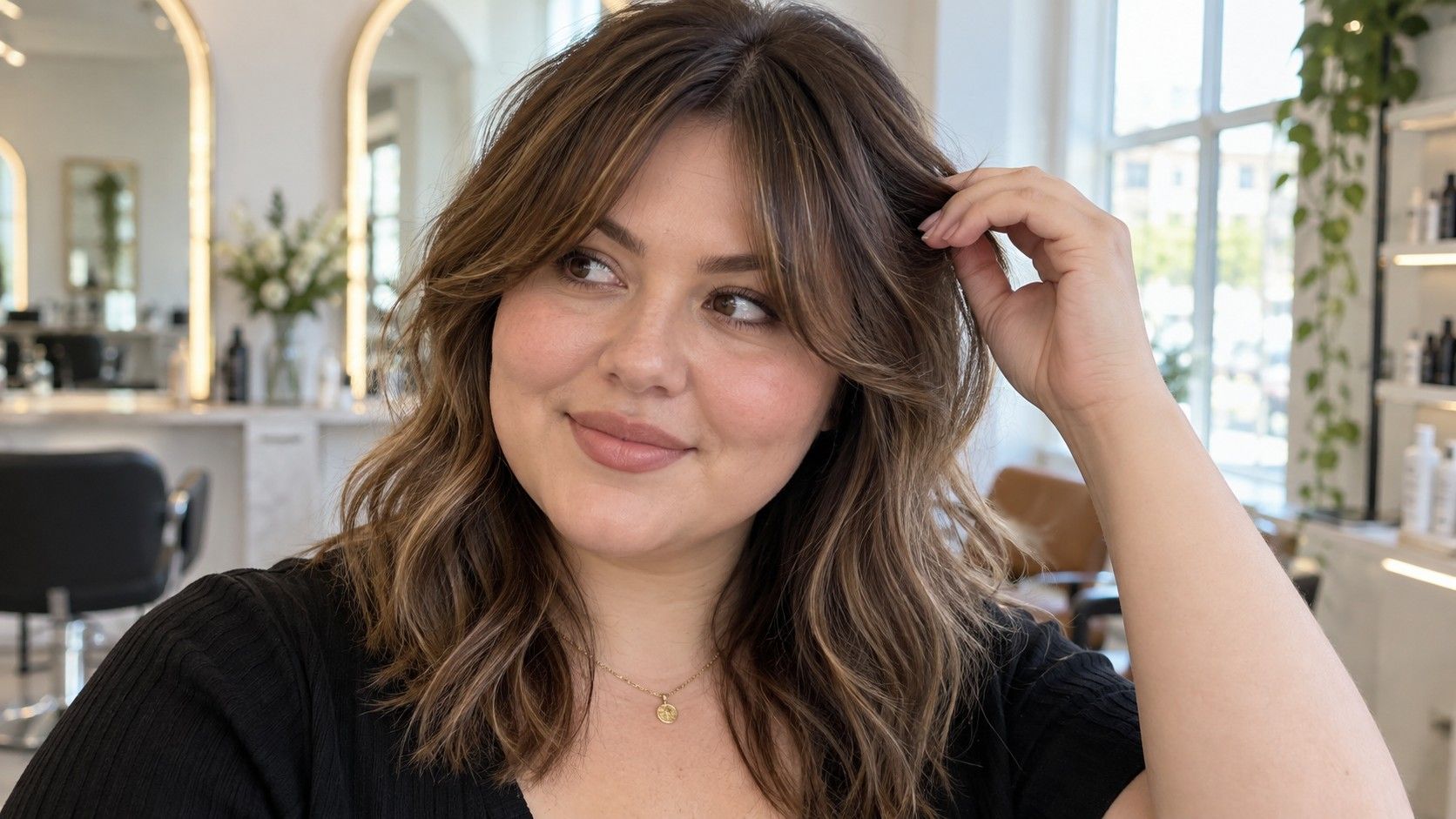
Curtain bangs divide near the middle and become longer toward the sides. The shortest point can sit near the brows, the bridge of the nose or lower, so confirm that point before the scissors come out. A short centre gives more definite forehead coverage. A longer version can feel closer to face-framing layers and is easier to tuck, but it may still need drying in a chosen direction to produce the curved sweep seen in a reference.
Side bangs place more of the fringe across one side of the forehead. Their usefulness depends partly on where your hair naturally separates. Try moving the part while the roots are damp and notice whether it stays after drying. If it immediately splits in the centre, a dense side fringe may require more attention than a longer, looser sweep. Decide whether you are willing to spend that time rather than treating the split as a failure.
Open curtain fringe. You like the centre of the forehead visible. Check will the shortest pieces stay out of your eyes?.
Side-swept fringe. You enjoy an uneven frame around the eyes. Check does your hairline support that direction?.
Straight fringe. You want a clear edge across the forehead. Check how dense and wide should that edge be?.
Long face-framing fringe. You want the option to tuck or clip it away. Check is the shortest section long enough for that?.
Check how either style joins the rest of the haircut. A fringe that blends into cheek-level pieces feels different from one separated from a long, solid perimeter. With a bob, the fringe and side length can gather at the same level and create a concentrated outline. Ask to see those pieces together, especially if you wear your hair naturally wavy. The transition may matter more than whether the fringe is called curtain or side-swept.
Make straight bangs as soft or definite as you like
Straight bangs do not have to be a single heavy rectangle. A lightly separated edge lets small gaps show through; a denser edge gives a stronger line. The stylist can also adjust the curve, with the centre a little shorter and the sides longer. Bring a reference that shows the edge clearly, then identify whether you like its density, its height above the brows or the way it connects at the temples.
There is a trade-off with a very light fringe. Fine pieces can move readily and feel less heavy, but they may separate when the roots become oily or when the wind catches them. A heavier fringe can stay more continuous yet require a larger section of hair from farther back on the head. Ask where that section will come from, particularly if you already prefer the sides to look full.
Do the final length check dry, looking forward. Brows lift during conversation and the forehead moves when you smile, so check more than a fixed pose. Very short bangs leave little room for later adjustment; longer bangs can usually be shortened gradually. If you are unsure, ask the stylist to pause at a conservative point. Looking through a fringe at the mirror is more informative than measuring a length with your fingers beforehand.
Let curls and cowlicks set realistic expectations
A cowlick near the hairline can lift one side, split the centre or turn the ends away from the intended direction. Show the stylist where it appears after your hair dries without intervention. It may be accommodated with a different length, section or part, but no fringe name guarantees that it will disappear. Be specific about whether you are happy to rewet the roots and dry them each morning.
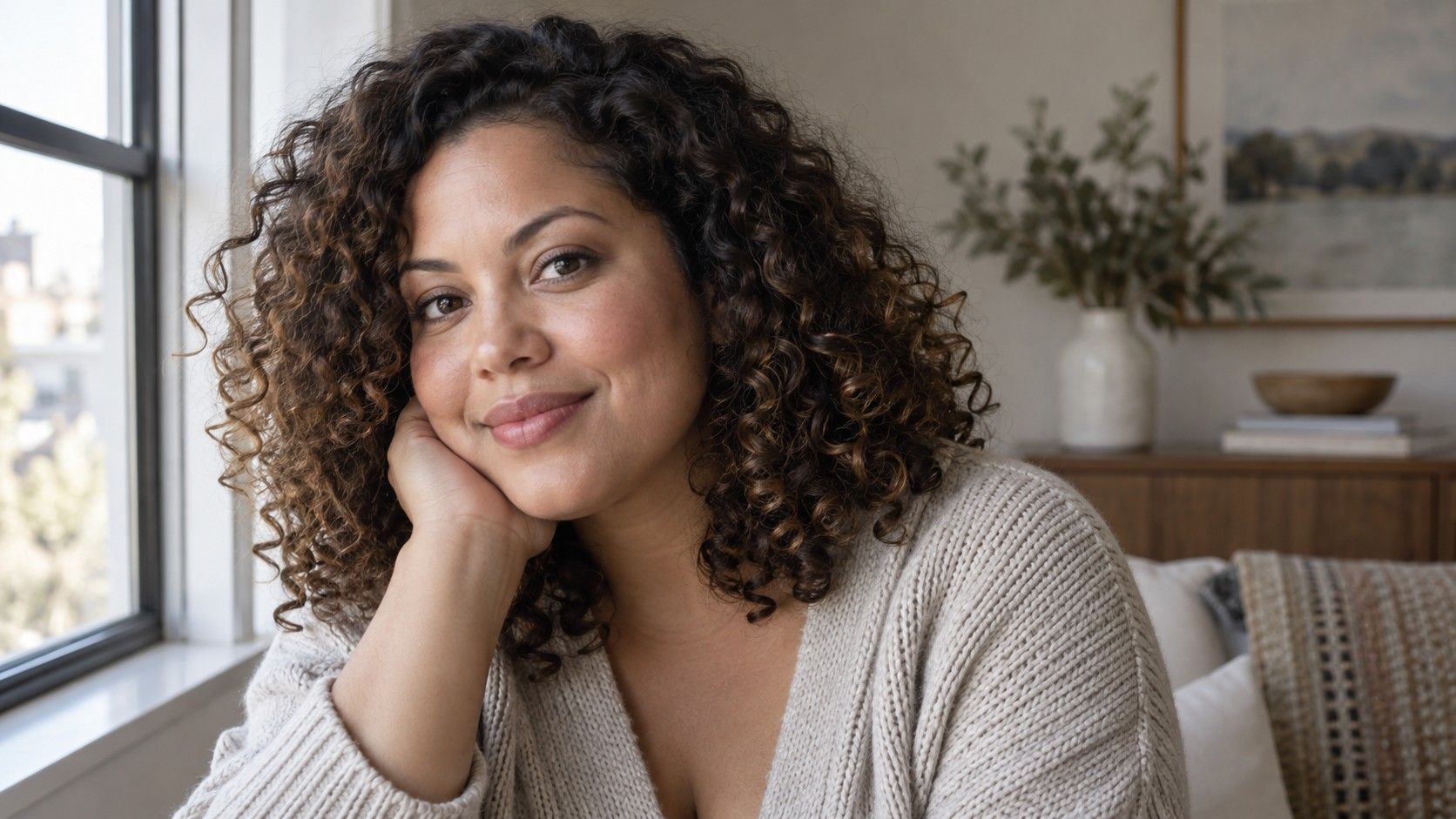
For curls, the dry position of each curl group matters more than the stretched length. Ask for the fringe to be assessed in the texture you wear most often. A curl that looks safely long when wet can spring above the brows; adjacent curls may shrink by different amounts. Cutting cautiously and checking the dry shape gives room to respond to those differences without chasing a perfectly straight line that your curls do not naturally make.
Humidity, hats and sleeping positions can change the next day's result. If you refresh curls with water, test how much wetting the front needs without disturbing the rest. If you dry a straight fringe, direct air away from the eyes and follow your tool's instructions. A brush or fingers may be enough for one hairline, while another needs more work. The useful question is whether the routine suits you on an ordinary weekday, not whether the salon can produce it once.
Plan for glasses, trims and the growing-out stage
Wear your normal glasses to the appointment and put them on before the final check. Fringe ends can land on the top rim, flick outward or catch where the temple arms meet the hair. Contact-lens days are worth mentioning too, since you may want the shape to work both ways. Also check how the fringe behaves when you tuck the sides behind your ears; that can pull the outer pieces back and reveal a much narrower centre.
Ask how trims are handled and which part will become awkward first. Brow-length bangs may begin touching the lashes before the rest of the haircut needs attention. Longer curtain pieces can remain wearable as they grow, though the original curve will change. Growth rates vary, so agree on signs to watch for rather than a fixed promise about how many weeks the shape will last. Avoid making a sudden large cut at home just because one piece looks longer while it is damp.
If you decide to grow the fringe out, use the changing length deliberately. A short straight fringe may first become a separated fringe, then a side sweep, before it is long enough to blend at the cheek. Ask the stylist whether a little reshaping at the outer corners would help. Removing more length from the centre simply to match the sides can delay the stage you are trying to reach.
Small clips, a soft headband or a changed part can make the in-between stage easier. Check that a clip holds without tugging the same area, and move it if it feels tight. Save a photograph on a day the fringe sits well, then another when it frustrates you. Those two views make the next conversation concrete: keep the open centre, reduce the weight at one temple, or leave enough length to tuck. You can change a detail without abandoning bangs altogether.