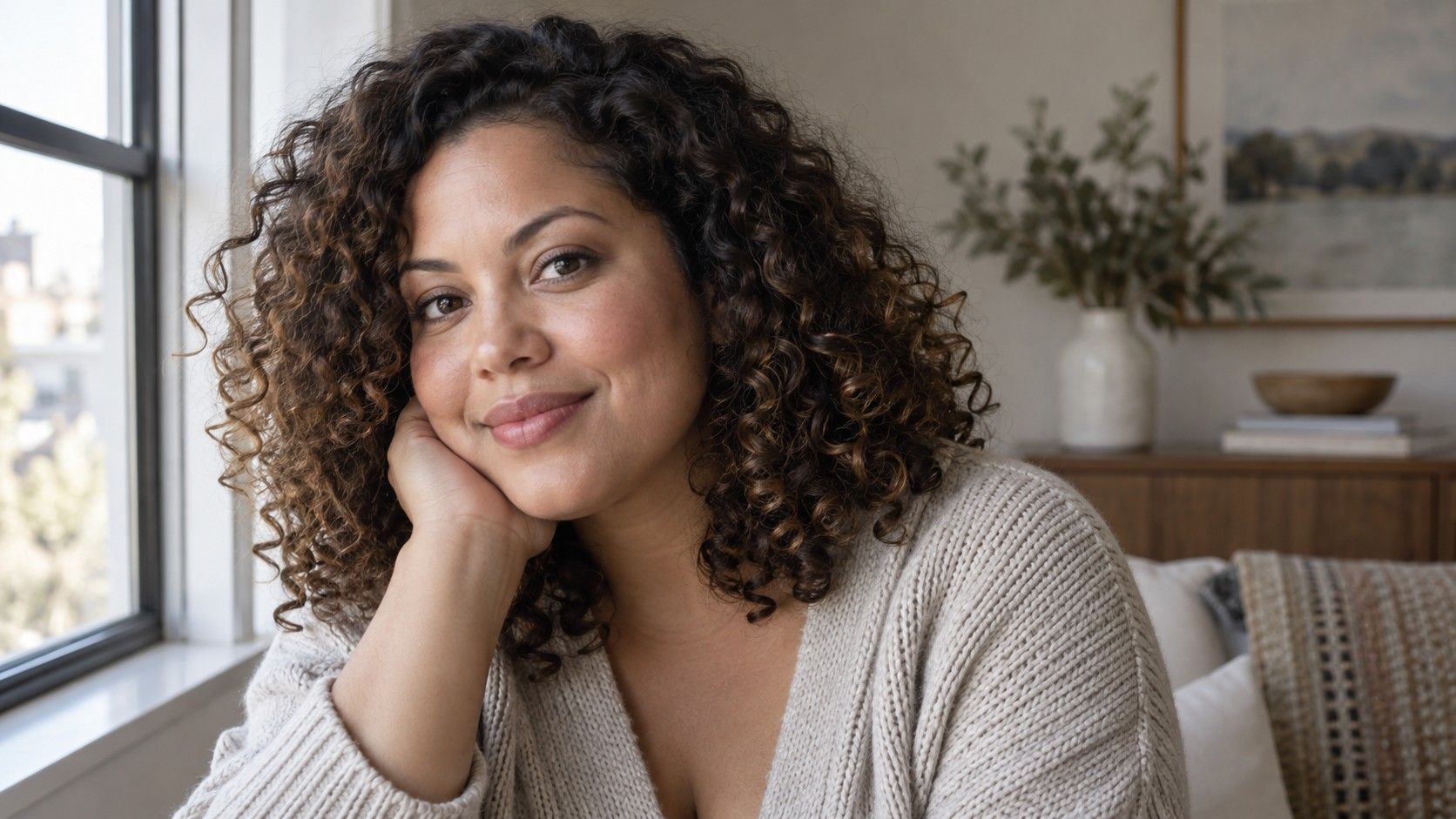
A curl changes position as it dries, so a haircut chosen from a smooth outline can be difficult to judge. With curly hair and a round face, I would begin by looking at the dry shape you already have: where it expands, where it falls flat and which pieces you keep moving out of the way. Those details make a better cutting plan than a list of lengths you are supposed to avoid.
Read the shape after an ordinary wash
Begin with the way your hair looks when you have followed your usual routine. A heavily stretched salon finish and a damp photograph can hide the outline you actually wear. Notice the widest point, how the front curls separate and whether the ends sit together or form a scattered edge. These observations give the appointment a clear starting point.
A round face often has a soft outline and broadly similar length and width. That says nothing about the curl pattern above it. You might have loose waves at the crown, tighter curls near the ears and a different pattern at the nape. Instead of choosing one label for the whole head, show the stylist the sections that behave differently.
I would take front, side and back photographs on a representative wash day, then a second set once the hair has settled. You do not need a perfect finish. The useful detail may be the side that flattens overnight or a front curl that rests higher than the others. Mention which version you prefer and which part of the routine you are willing to change.
Keep the weather and styling method in mind when comparing pictures. A humid afternoon and a freshly diffused morning are different conditions. You cannot make every day identical, but you can avoid judging a haircut solely on the one moment when every curl has been placed by hand.
Choose where you want width and openness
Advice about curly hair and a round face often assumes that side volume should disappear. That is a preference, not a rule. A full rounded silhouette can be exactly the shape you want. You may instead prefer a little more height, an open cheek or a longer outer line. Describe that goal directly rather than asking the stylist to make your face look like another shape.
Try moving the front curls before deciding. Pin a section loosely away from one cheek, then let it return. Shift the part without pulling the roots tightly. Compare the visible space around the eyes and temples, not the apparent size of your face in a close phone photograph. Small changes can tell you more than another page of haircut rankings.
A fuller rounded outline. Where layers support the sides. Check whether the ends maintain that shape when dry.
A more open cheek area. Front curl length and placement. Check whether pieces can tuck or pin back comfortably.
More movement above the forehead. Crown length and root direction. Check whether lift lasts without extensive styling.
A longer outer line. Weight through the lower lengths. Check whether the roots become flatter than you prefer.
Choose one main aim for the first cut. Asking for maximum length, large crown volume, minimal side width and almost no layers can create conflicting expectations. A stylist can explain which compromise is realistic once they have seen your density and the way your curls sit.
Discuss layers in their dry position
A layer that sounds long enough when the hair is stretched may rest much higher once the curl returns. Ask where the shortest section is expected to land dry and how the stylist will check it. There is no reliable universal shrinkage percentage for every person or every area of one head.
Explain how you usually dry your hair. A cut planned around a stretched finish may behave differently after air-drying. If you alternate between smooth and curly styles, tell the stylist which result matters most and ask what compromise the other finish involves. Photographs help, but the hair in front of them is the better reference.
Removing weight can allow curls to move differently, yet more layers do not guarantee a better outline. Some sections may spring up or spread sideways. On lower-density hair, extensive layering can also make the perimeter feel sparse. Discuss which area feels heavy and which area you want to keep substantial instead of asking for thinning everywhere.
Check the back as carefully as the front. A cut may frame the face well and still form an unexpected shelf at the shoulders. Turn your head, lift the hair gently and let it settle. The aim is to understand the resting outline, with enough room for natural variation between individual curls.
Leave room for the fringe to move
A curly fringe can be a few loose pieces or a more defined section across the forehead. Decide whether you want it to separate, skim your eyebrows or stay well above your eyes. The length of one stretched strand does not describe that result. Ask to see how the proposed section behaves in its natural pattern before committing to a shorter version.
Start conservatively if the front is unfamiliar territory. It is easier to shorten a dry fringe further than to restore length after a curl rises. A cowlick or a looser curl at the hairline can also create uneven spacing. That variation may look good to you; it simply needs to be included in the plan.
Consider the days between washes. If you wear a bonnet, tie your hair up or sleep on one side, the fringe may need its own small reset in the morning. Ask for a demonstration that fits your routine, such as re-dampening a few pieces rather than wetting the whole head. Try the fringe with glasses if you wear them.
A long front section is another option when you want movement without a dedicated fringe. Check whether it can tuck behind the ear and how it joins the next layer. The join matters when the front curls separate: an abrupt difference may leave a gap you did not notice while the hair was freshly arranged.
Use styling to support the cut you chose
The product routine should serve your preferred finish. Some people like clearly grouped curls; others enjoy a softer, more expanded shape. Ask the stylist to show that finish with an amount of product you would actually use at home. A very polished demonstration can conceal how much time and careful placement it required.
Compare one variable at a time if you are changing the routine. Keep the same drying method while trying a smaller amount of product, or keep the products the same while changing the part. Otherwise you may credit the haircut for a difference caused by styling, or blame it for a result that disappears with a simpler adjustment.
If you diffuse, use the tool according to its instructions and a comfortable setting. If you air-dry, discuss how the roots settle without a brush lifting them. Neither method is a face-shape requirement. The relevant question is whether the outline still appeals once the hair is fully dry and you have moved around normally.
Before leaving, ask what a reasonable refresh looks like for the specific cut. A short front section may need attention while the longer curls remain fine. Avoid collecting an elaborate routine you already know you will not follow. A cut that works with your ordinary habits is easier to assess honestly.
Make the next appointment about observed changes
Track the point at which the shape stops doing what you wanted. Perhaps the crown grows flatter, the sides feel heavier or the fringe starts blocking your view. Those are better reasons to discuss a trim than a fixed schedule copied from someone with a different curl pattern.
Bring a photograph of the dry result you liked most and one of the problem you want to solve. Say how long after washing each picture was taken and whether you changed products. That gives the stylist a useful comparison without pretending that curls should sit identically every day.
Keep the goal specific: preserve the rounded volume, open the cheek area a little more, or maintain the fringe while growing the back. There is no need to redesign the entire cut at each visit. Small adjustments to a shape you understand can be more satisfying than starting over with another idealised reference photo.