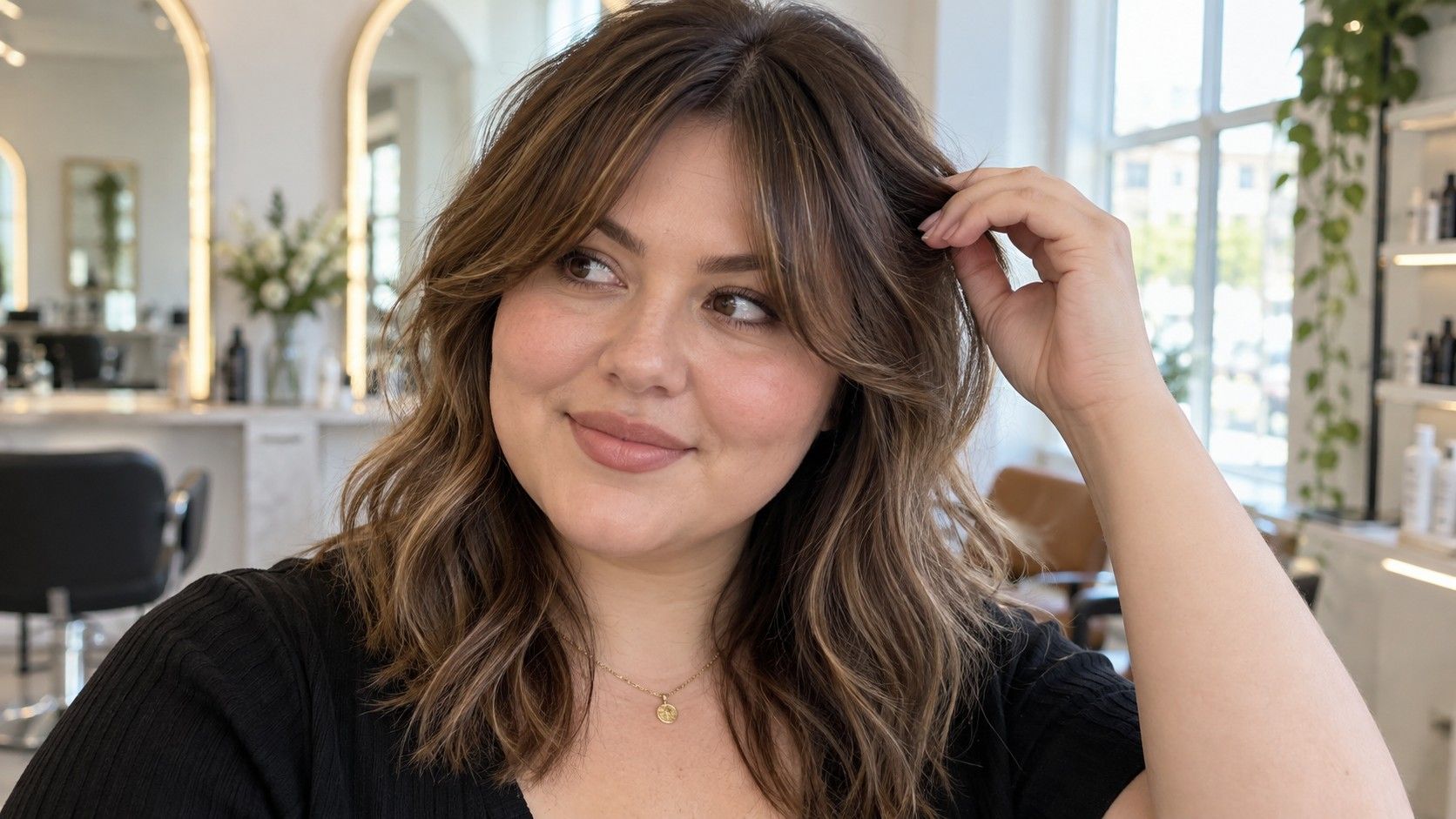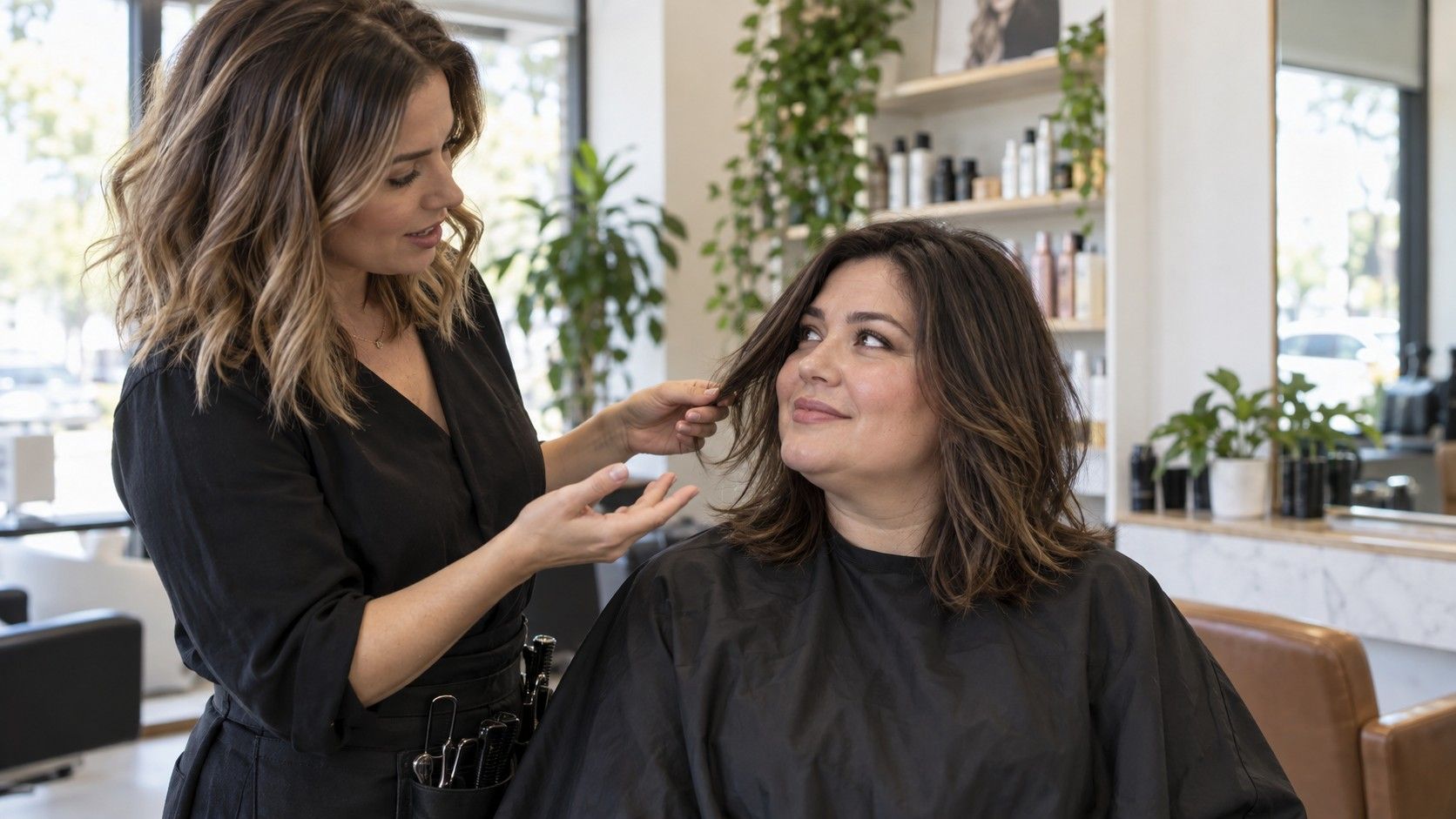
A haircut photo can look convincing until you try to imagine washing it on a busy Monday. When comparing haircuts for round faces, I would start with the shape you want to see and the work you are willing to do. Your face outline is one part of that decision; hair density, natural movement and the need to tie it back often matter just as much.
Decide what you want the outline to do
Before saving another haircut photo, look at your current hair from the front and the side. Does the width sit at your temples, beside your cheeks or near the ends? A round face usually has a softly curved outline and fairly similar length and width, but that label says little about the haircut you will enjoy. You might want to keep a rounded silhouette, introduce a sharper edge or expose your face more fully. Those are different requests.
I find comparison more useful than a list of forbidden cuts. Pull one side behind your ear, then release it. Try a centre part and a loose side part without changing the rest of your hair. These small tests reveal whether you prefer an open cheek, an uninterrupted line beside your face or some movement across the forehead. They do not accurately simulate a new cut, but they give you language for the consultation.
Choose reference pictures for the feature you actually like. A long bob may appeal because of its clean perimeter, not because of its length. A shag may appeal because it moves when the person turns. Save a second picture showing an outcome you would find inconvenient, such as ends that require daily smoothing. Explain the difference without calling either face or haircut good or bad.
Compare the cuts by the work they ask of you
Haircuts for round faces span almost every length. The useful question is which outline works with your texture and schedule. A blunt perimeter can give fine hair a more continuous-looking edge, while a layered cut can redistribute the volume of dense hair. Neither effect is guaranteed by the face shape label. Your stylist needs to see the hair dry and understand how you normally wear it.
| Option | What to compare | Practical trade-off |
|---|---|---|
| One-length bob | A clear edge around the jaw or below it | The line may need regular trimming and a little smoothing |
| Collarbone cut | Movement at the shoulders and enough length to tie back | Ends can flick where they meet clothing |
| Long layers | Shape through the lengths while retaining a long perimeter | Short front pieces may escape a ponytail |
| Short crop | An exposed outline with detail at the fringe and temples | Growth can change the shape quickly |
| Textured shag | Separated sections and a less solid outer edge | Its finish depends heavily on natural texture and drying |
Use the table to narrow the appointment discussion to two options. If you need a secure bun for work, check the shortest front section rather than the overall length. If you wear headphones all day, ask how a shorter side section will sit after being pressed flat. These constraints are more informative than a claim that one cut is universally flattering.
Place the first layer where you want movement
Ask where the shortest face-framing piece will finish when your hair is dry. A layer that ends near the cheekbone creates a different interruption from one that reaches the mouth or the jaw. There is no required landing point for a round face. The choice depends on whether you want a visible sweep across the cheek, a tucked-back section or a longer line alongside it.
Show the stylist your usual part before discussing layers. A front section cut for a deep side part may fall differently when you divide the hair in the middle. If you switch parts throughout the week, say so. Ask to see the proposed starting point with the hair held loosely, without stretching a wave straight. Curly and wavy sections can rest considerably higher when dry.
More layers do not automatically mean less bulk everywhere. Short pieces may create lift or spread out at the sides, while excessive removal can leave the ends looking thin. With dense hair, ask which area needs weight removed and which area should retain it. With fine hair, discuss whether a small amount of face framing would provide enough movement while keeping the perimeter intact.
Try crown lift without building your morning around it
Some people like a little height above the forehead because it changes the overall silhouette. Others prefer a smooth crown or a balanced rounded shape. Test the effect before choosing a cut that relies on it: lift the roots gently with your fingers, then let them settle. Decide whether you like the change from the side as well as the front.
A cut cannot promise lasting root volume. Growth direction, density, product weight and humidity all affect how hair sits. If your roots lie flat after an hour, request a shape that still looks intentional when they settle. A reference photograph with a raised crown may show a blow-dry and styling product rather than the natural result of the haircut.
During the finish, watch one manageable technique instead of collecting several. That might be drying the front roots in the opposite direction briefly, or lifting a section with a brush. Ask the stylist to show the result after it cools. If you dislike heat styling, make that clear before the cutting begins so the plan does not depend on a daily blowout.
Judge the cut in your own texture
Look for photographs with density, wave pattern and finish close to yours. A shiny straight bob gives limited information about how that outline behaves with loose waves. A very dense curl pattern also changes where the visual weight sits. Face shape can help describe the frame; texture determines much of the frame itself.
Arrive with your hair in a representative condition when the salon permits it. Tell the stylist whether you air-dry, straighten, diffuse or alternate between those methods. If you often wear both natural waves and a smooth finish, ask what compromise the cut involves. The shortest sections should be checked in the state in which you will usually see them.
Notice what happens behind the ears and at the nape as well. Hair may kick out when it touches the shoulder or gather into a wider shape as it dries. These are useful observations to bring from home, not faults you must eliminate. A cut can work with that movement, but the consultation needs to account for it rather than treating a reference image as a pattern to copy exactly.
Leave the consultation with a specific plan
A clear request might be: “I want a collarbone length I can tie back, a little movement around my face and a finish that works when I air-dry.” Add the amount of time you actually spend styling. Five relaxed minutes and twenty minutes with a round brush lead to different choices even when the reference picture is the same.
Before the first cut, agree on the longest and shortest points, the part and the amount of visible layering. Ask whether the photograph depends on extensions, a very polished blow-dry or texture unlike yours; a stylist may be able to identify likely differences, though a photograph cannot reveal every detail. It is reasonable to keep more length at the first appointment and reassess once you have lived with the shape.
Finally, discuss upkeep in practical terms. Ask when the outline is likely to lose its definition and what can be allowed to grow without difficulty. After the appointment, take a quick picture on an ordinary wash day and note any pieces that feel awkward. That gives the next consultation something concrete to improve. The right haircut is one you can recognise as yours after the salon styling has gone.