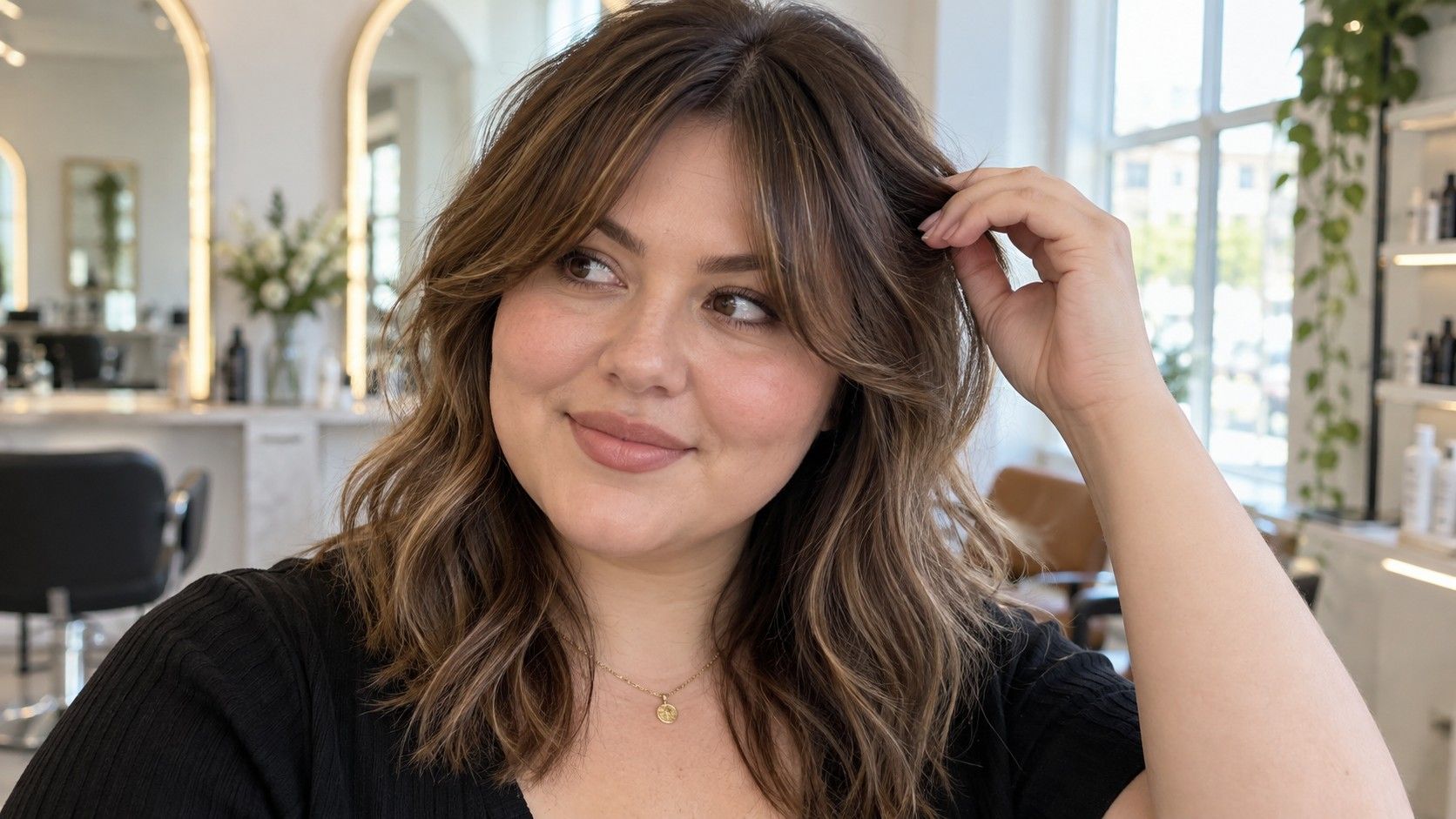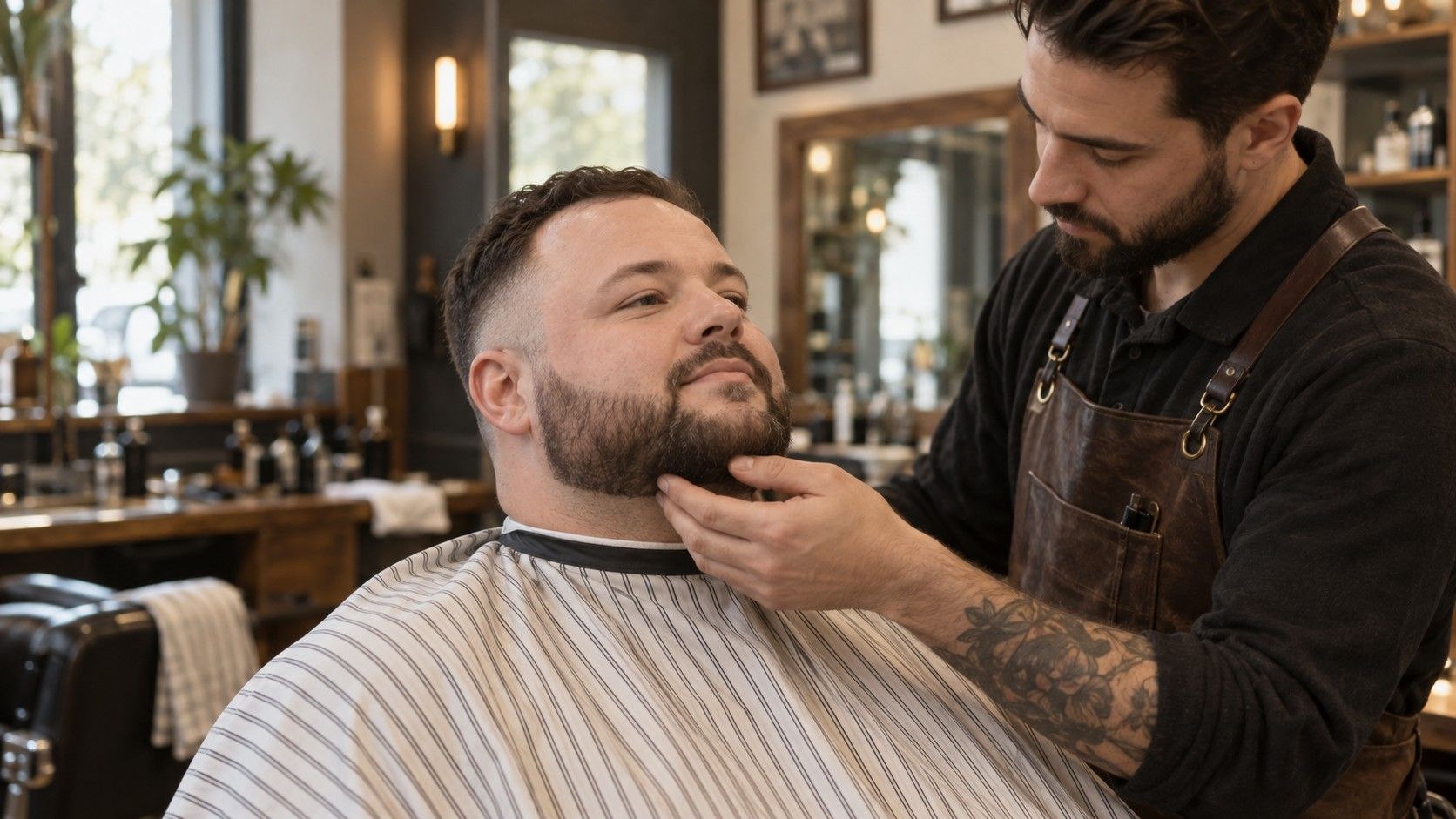
A round face shape is easiest to recognize when you look at the whole outline: a relatively compact length, width concentrated around the cheeks, and a jaw that turns toward the chin in a soft curve. A full cheek alone tells you very little. Hair, expression and a close phone camera can each change the impression. Start with a clear view, compare a few features together, and leave room for an in-between result.
Get a clear view before reaching for a measuring tape
Stand in front of a mirror with your head level and your eyes looking straight ahead. Pull your hair away from the temples and jaw, including any pieces that usually sit beside the cheeks. A high bun is convenient, but tuck loose strands behind your ears rather than pulling so firmly that your expression changes. Remove large earrings and glasses for the first look. They can interrupt the outline you are trying to see.
Use even light from the front or a nearby window. Strong light from one side throws a shadow under one cheek and can make that side seem narrower. Keep your lips relaxed; a broad smile raises the cheeks and changes the lower outline. Take a second look with your usual expression later, because the shape you style in daily life includes movement. The neutral view simply gives you a consistent starting point.
If you use a photograph, avoid holding the phone at arm's length with the camera above your eyes. Ask someone to take a straight-on picture from farther away, or use a timer with the phone supported at face height. Keep the camera level rather than tilting the top edge toward you. You do not need a studio portrait. You need a picture that has not made the forehead large and the jaw small through perspective.
Compare length and width without chasing a perfect ratio
For facial length, compare the central hairline with the bottom of the chin. For width, compare the outer cheek areas at their widest visible point. These are practical styling observations, not anatomical measurements. A soft tape pressed around the surface follows curves and can give a different result from the straight distance you see in a photograph. Use the same method for both dimensions and note what you actually measured.
A round outline often looks relatively close in length and width, while an oval outline usually has more visible length. That does not mean equal numbers are required. Hairline position, chin length and how you locate the cheek edges all affect the result. Measuring to the top of the hairstyle instead of the hairline is a common mistake; measuring only the exposed skin below a fringe is another. Both can send you toward the wrong label.
Try comparing the two distances on one straight-on photograph with a simple on-screen ruler. Then repeat on a second photograph taken under similar conditions. If a tiny change in the chosen points flips the answer, record the proportions as close rather than declaring a precise category. Your next checks, especially the jaw and the position of the widest part, will be more useful than extra decimal places.
Follow the cheek-to-chin curve
Look from the widest cheek area down toward the chin on each side. In a round face, that transition tends to be curved, with no strongly squared corner at the back of the jaw. The chin may look short and rounded, though individual chins vary. The broadest area often appears around the cheeks rather than at a wide, straight jaw. You are looking for several features working together.
Do not mistake cheek fullness for the entire outline. An oval face can have full cheeks and still be clearly longer than it is wide. A square face can have soft cheeks above a broad jaw. Similarly, a small pointed chin can sit below a comparatively rounded upper face. Look past one noticeable feature and ask whether the sides form a continuous curve or change direction at a distinct corner.
Check your jaw with your teeth resting comfortably rather than clenching. Clenching can make the area near the jaw corners look more pronounced. Facial hair can create a new visible boundary, so compare a clear photograph from before a beard if you already have one and want to understand the outline beneath it. There is no need to shave for a label. The outline you currently wear may matter more for choosing a haircut.
Separate a round outline from oval, square and heart shapes
Comparison is easier when you ask one question at a time. First ask whether length is clearly greater than width. Then inspect the jaw corners. Finally compare the forehead with the lower face. Trying to match your face to a page of silhouettes all at once can encourage you to pick whichever hairstyle or drawing looks most familiar.
Round and oval. Overall length relative to cheek width; an oval outline generally looks longer. Check a tall hairstyle, hidden hairline or high camera angle.
Round and square. The turn of the jaw and its width compared with the cheeks. Check soft cheek tissue or a beard covering the corners.
Round and heart. Forehead width and how much the lower face narrows toward the chin. Check wide bangs or hair tucked tightly at the temples.
A rounded hairline does not prove a round face, and a widow's peak does not settle a heart-shaped result. Hairlines are details within a larger outline. The same goes for a pointed or dimpled chin. If the cheek width and curved jaw suggest round but the length suggests oval, “round-oval” can describe what you see more honestly than either word on its own.
Use examples as a vocabulary aid rather than a matching game. Two people given the same label may have different forehead heights, cheek placement and hair texture. A hairstyle shown on one of them may behave differently on the other. The useful part of the comparison is identifying the feature you want to work with, such as width at the cheeks or a short lower face.
Check whether the camera is changing your answer
Perspective depends on camera distance. A close selfie places the nose nearer the lens than the ears and outer cheeks, exaggerating differences in distance. Moving farther away and cropping the resulting image can give a more consistent view of the outline. Changing only a zoom setting while keeping the phone very close does not remove that perspective problem.
Angle matters too. A camera looking down can make the upper face dominate and obscure the jaw; a low camera can emphasize the chin and lower face. Turning slightly sideways hides some width on the far side. For comparison, keep both ears approximately as visible as each other and place the camera around eye level. If one cheek looks much broader, check head rotation before assuming the difference belongs to your face.
Beauty filters and portrait retouching may narrow a jaw, enlarge eyes or change cheek contours without making the alteration obvious. Turn them off when you can. Compare the photograph with the mirror instead of treating a single image as a verdict. Small natural differences between the two sides are normal, and an outline does not need to be perfectly symmetrical to be useful for styling.
Use the result to make one styling decision
Once the broad pattern is clear, write down what you noticed in plain language: “cheeks widest, curved jaw, a little longer than wide.” That note often helps more than “round” by itself. Take it to a haircut consultation alongside photographs of styles you like. Add your texture, usual parting, time available for styling and whether you wear glasses. These details decide how a cut works after you leave the salon.
For frames, start with physical fit at the bridge, temples and cheeks. A frame that slides or touches the cheeks when you smile needs a fit adjustment or a different size, regardless of its recommended face-shape category. After fit, compare the look you prefer: a noticeable straight brow line, a rounded rim, a light frame or a bold one. A round outline does not rule any of those out.
If your answer stays mixed, choose according to the feature involved in the decision. For a fringe, forehead height and how the hair falls may deserve more attention than the jaw. For earrings, visible length and movement may matter more than cheek width. Revisit the label only if it helps you explain a preference. You can like a compact silhouette, emphasize a curve or add a little height without trying to turn your face into a different shape.