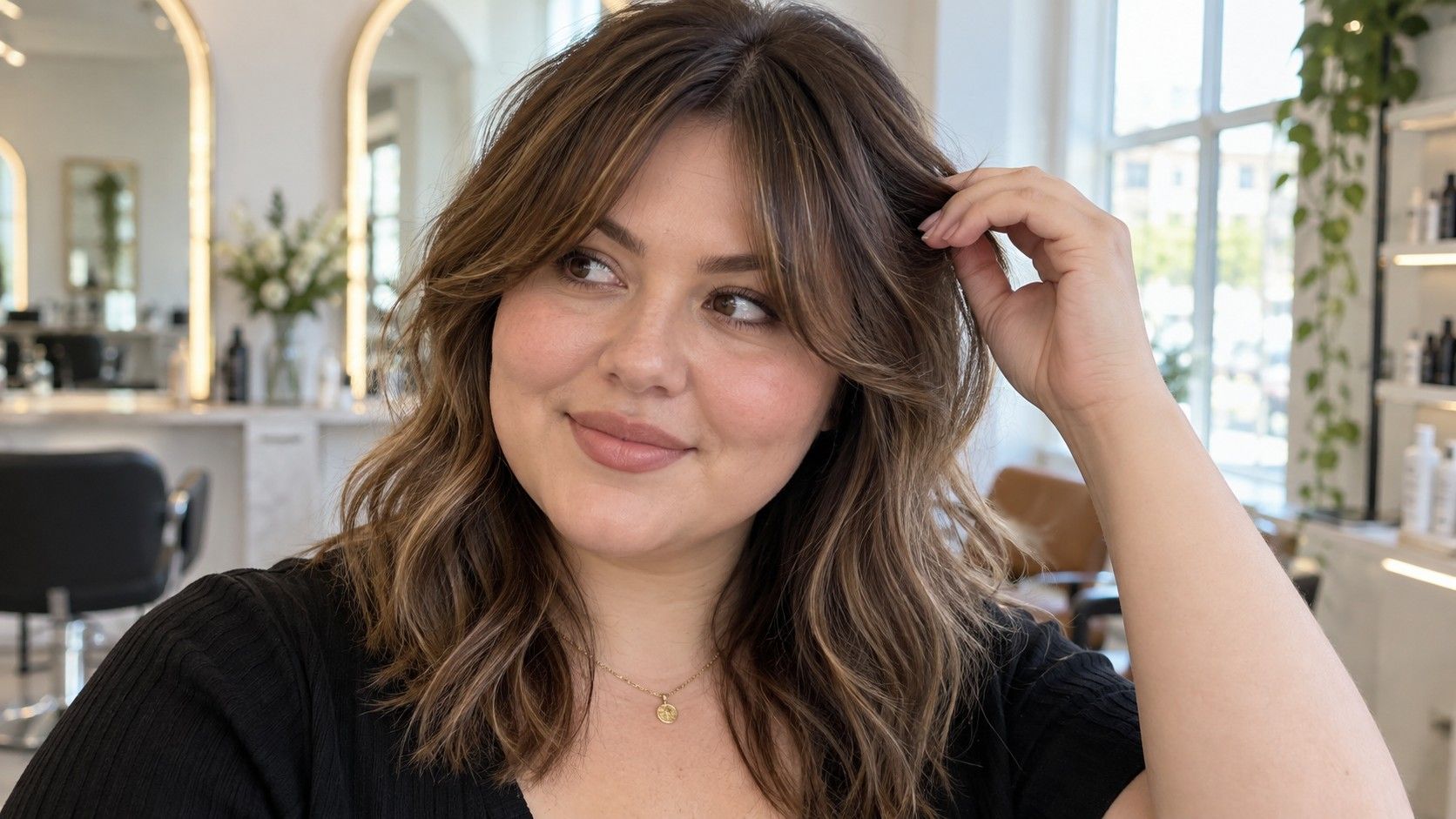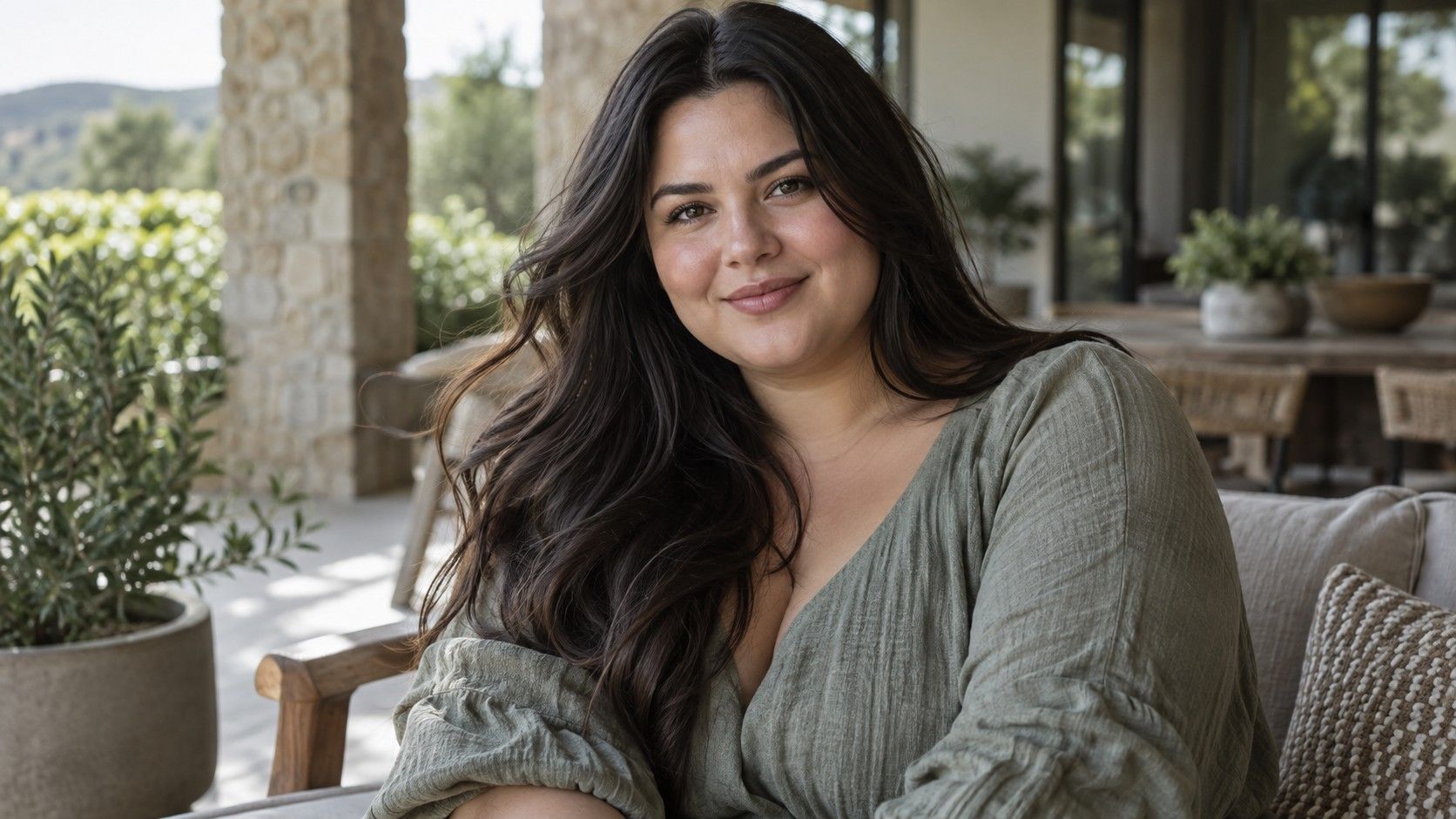
Long hair offers plenty of room to change the frame around a round face without sacrificing the length you enjoy. The difficult part is deciding which change will help: a cleaner perimeter, shorter front pieces, layers through the back or simply a different part. I would make that decision around your natural texture and daily routine, with the ponytail test included before anything is cut.
Keep the length for a reason you actually value
Long hair can mean shoulder-blade length, waist length or simply enough to put into a secure bun. Decide which part matters before discussing layers. You might value the weight, the ability to braid it, the look of a continuous edge or the freedom to wear it up. A cut should preserve that priority rather than treating length as spare material.
A round face usually has a curved outline and similar overall length and width, but long hair does not have to disguise those proportions. You can enjoy the contrast of a straight outer line or prefer full waves around your cheeks. Neither aim is compulsory. I find it more helpful to say what I want to see than to ask a haircut to correct a feature.
Look at your hair from the back before choosing a reference. Thin-looking ends, an uneven perimeter and a heavy lower section are different concerns. The amount that needs trimming depends on the hair you have and the edge you want. Agree on the length to be removed in a visible, concrete way before the scissors come out.
Then test the practical requirement. Put your hair into your usual ponytail or bun and show the stylist which pieces must stay inside it. A long overall length does not prevent short front layers from falling out. That small detail can matter more during a workday than the shape shown in a salon photograph.
Choose the first layer by its job
Layers can add movement, change where weight sits and break up a solid outline. They can also reduce the fullness of the ends or leave short pieces that require separate styling. Instead of requesting “lots of layers,” identify the problem: a heavy lower half, a stiff front section or hair that hangs in one uninterrupted block.
Ask where the shortest layer will sit when the hair is dry. A section around the jaw moves differently from one starting below the shoulders. With waves or curls, it may rest higher than it appears when stretched. Show the stylist your ordinary texture and explain whether you usually smooth it or leave it natural.
A substantial lower edge. Minimal layers with limited face framing. Check less movement through the back.
A secure ponytail. Front sections long enough to reach the tie. Check less short framing around the cheeks.
More movement in dense hair. Layers placed where weight feels heavy. Check some sections may expand or need guidance.
A soft front with a long back. Gradual face framing. Check the front may need a separate drying step.
These are consultation routes, not promises about a particular technique. Density, growth direction and texture change the result. Ask the stylist to explain what each proposed layer will do on your hair, and where they would leave weight alone.
Compare front pieces before making them shorter
Face framing can begin near the cheekbone, mouth, jaw or farther down. The position creates a different point of movement, but there is no correct starting line for every round face. Think about whether you want the cheek open, a strand beside the jaw or a longer piece that can move behind the ear.
Try a loose pinning test. Fold a front section to suggest a shorter length without pulling it tight, then look from the side as well as the front. It will not reproduce the finished cut, especially on curls, but it can reveal how much uncovered space you enjoy. Compare it with the hair simply tucked away.
If you prefer a low-effort routine, ask how the front will dry without a round brush. A photograph of swept-back curtain pieces may depend on a deliberate blow-dry. Long framing that looks graceful in the reference can fall forward into your eyes when it dries in your natural direction. That is worth discussing before shortening it.
Keep the join between the shortest front piece and the rest of the hair in view. A smooth transition and a deliberate disconnected piece create different looks. Ask to see the result with both sides forward, one side tucked and the hair pulled back. Those are the views you are likely to use during an ordinary day.
Treat the part as an adjustable choice
A centre part leaves a different frame from a side part, especially when there are layers around the face. Try both before deciding which one the cut should favour. A round face does not rule either out. Your natural root direction and the way you like the forehead exposed are more useful decision points.
Move the part gradually rather than forcing all the hair to the opposite side at once. Notice whether a front section lifts, splits or falls back into its original position. A strong growth pattern may need daily help to hold an unfamiliar part. Decide whether that small task fits your routine.
Tell the stylist if you change sides frequently. Front layers balanced for a fixed deep part may sit differently when you switch to the middle. Ask for a demonstration in both positions so you can see the compromise. Exact symmetry in the haircut does not guarantee identical behaviour on each side of the head.
For photographs, compare the parts at a similar camera distance and height. A close selfie can change apparent facial proportions enough to distract from the hair. The goal is to choose a frame you like in everyday conditions, including movement, rather than to win a comparison between two differently angled pictures.
Balance the roots and ends without chasing constant volume
Long hair carries weight, and some people prefer the smooth roots that come with it. Others want more lift above the forehead or less fullness toward the bottom. First separate the haircut question from the finish. A raised crown in a reference may owe much to drying and product rather than to layers alone.
If you want lift, ask to see one technique you can repeat at home. It might involve drying a small root section in a different direction or using a brush briefly. Check the result after the hair cools and settles. If it disappears quickly, discuss a shape you still like when the roots lie closer to the head.
At the ends, decide whether you want a clear edge or a lighter, less continuous finish. Fine hair may look less substantial after extensive layering, while dense hair may retain a heavy outline despite a few front pieces. The answer is not automatically more thinning. Ask exactly where weight would be removed and what that would change.
Shoulder contact, clothing and natural wave can make the ends flick or gather. Look at the haircut wearing the kind of neckline you use most often. You may like that movement; if you do not, mention it. A practical observation about your own hair is more useful than a general rule about where long hair should fall.
Make the daily version part of the consultation
Show the stylist how you normally wear your hair up. A high ponytail, low bun and loose braid place the front sections under different demands. If you need to keep every strand back, say so before choosing cheek-length framing. If you enjoy loose pieces, decide how many and where they should rest.
Be honest about drying time and tools. A long layered blowout may be enjoyable on weekends and unrealistic before an early start. Ask to see the cut in a simpler finish as well. You should leave knowing which parts are built into the haircut and which parts depend on deliberate styling.
Set a maintenance plan around the edge and shortest sections. The front may need attention before you want to lose more length at the back. Ask whether a focused tidy-up is possible and how you will recognise when the overall shape needs refreshing. There is no single interval that suits every long haircut.
After a few washes, record one thing you want to preserve and one thing you would change. Perhaps the ends feel better but the front needs more length, or the layers move well while the roots remain flatter than you expected. Bring that evidence next time. Long hair works best when the small details follow the life you actually lead.