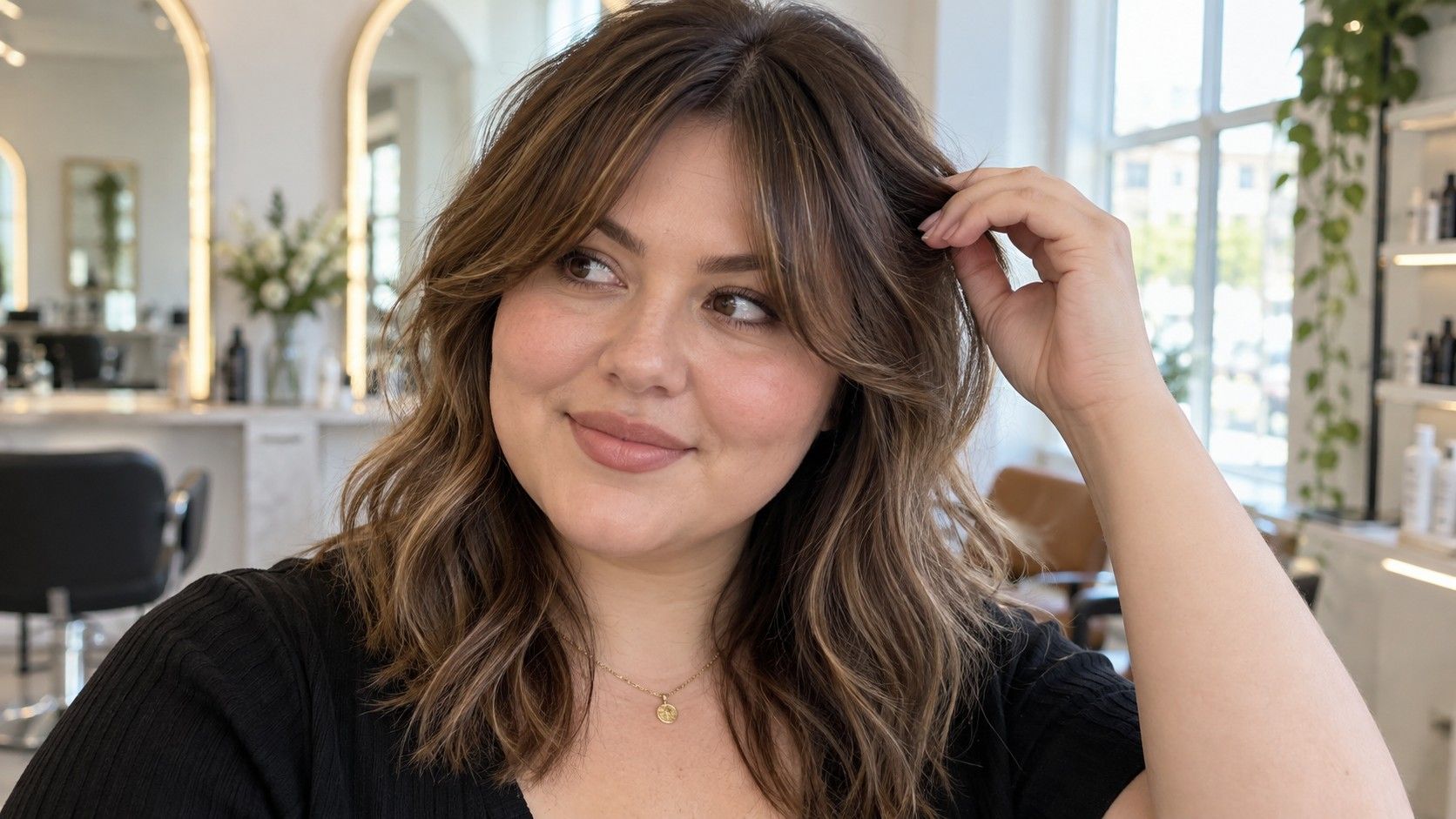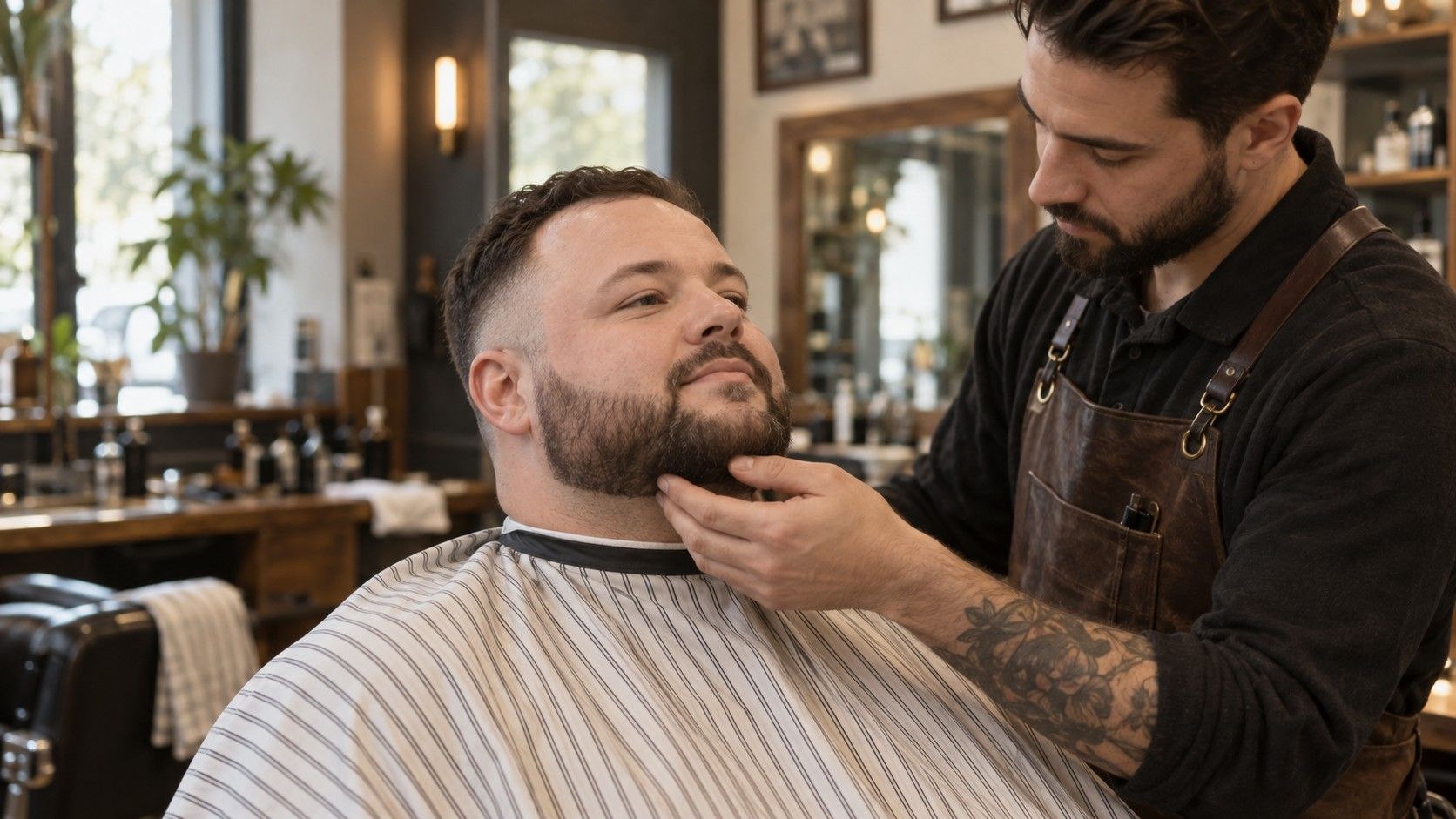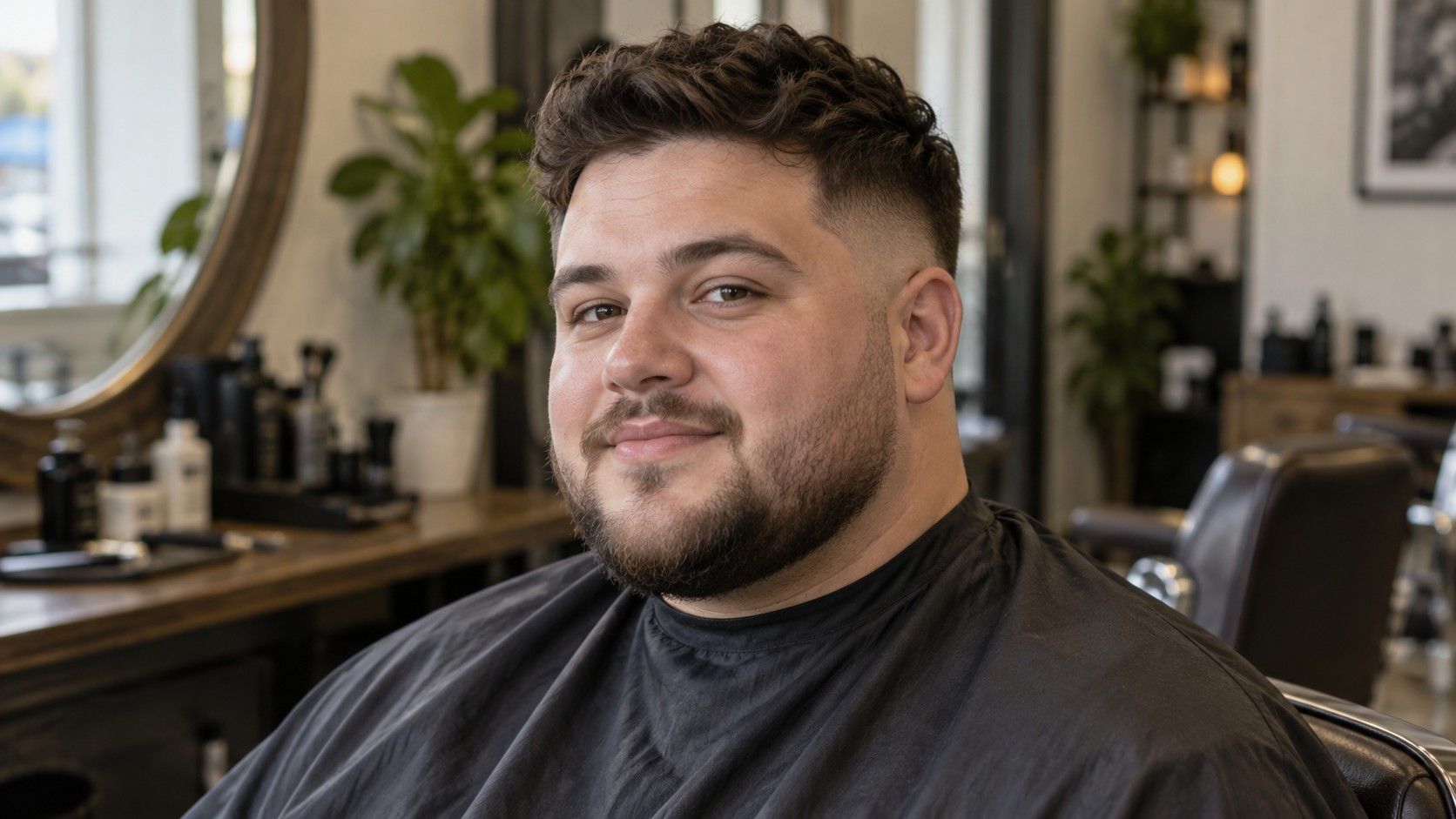
A haircut changes the outline around your face through the width at the sides, the weight above the temples and the direction of the top. Men’s haircuts for a round face work best when those choices suit the hair you actually have and the style you enjoy wearing. You can prefer a close crop, a loose fringe or a fuller shape without treating your facial proportions as something to fix.
Decide which silhouette you want before naming a cut
Look at your hair from the front and in profile, with your head level. Notice where it spreads sideways and where it sits close. If you want more height, identify whether that means a lifted front, texture through the crown or simply less weight at the sides. These produce different shapes. A high front with a flat crown can look sharp from one angle and unexpectedly steep from another.
Reference pictures are most useful when the hair resembles yours in density and texture. A swept-back style on thick straight hair does not show how the same length will behave on soft fine hair or tight curls. Bring a second reference if it shows a more realistic texture. Point out the part you like in each: the soft temple, the length over the ear or the restrained height at the front.
Check the whole outline with facial hair and glasses in place. A dense beard and full side sections create a different overall frame from the same haircut worn clean-shaven. The aim might be a compact profile, a soft rounded shape or a clear contrast between top and sides. None is required by a round face. Agree on the desired effect before discussing guard numbers, since a number alone cannot describe the silhouette.
Set the side length and the height of the transition
A taper shortens the hair around the edges, while the rest of the sides may stay relatively full. A fade makes a more noticeable transition between short and longer lengths. Barber terminology varies, so show where you want the shortest area and how high the transition should rise. A low fade, a high fade and a scissor-cut side can leave very different amounts of weight at the temple even with a similar top.
Taking the sides very close increases the contrast with the top and exposes more of the head's natural contour. Leaving more length can feel softer and may allow the hair to lie down, but an awkward intermediate length can stick outward. Ask the barber whether your side hair is likely to stand up at the proposed length. If it does, going slightly shorter or leaving enough length to bend can be more useful than forcing it flat every morning.
| Side treatment | What it changes | What to check |
|---|---|---|
| Soft scissor-cut sides | A fuller, less contrasting frame | Whether the hair clears the ears as it grows |
| Low taper | A tidy edge while retaining side weight | How the temples connect to the top |
| Higher fade | More visible contrast and exposed contour | The side view and how quickly the contrast softens |
| Uniform short crop | A compact outline with little separation | Crown direction and scalp visibility at that length |
Do not judge a fade only while facing the mirror. Use the second mirror to check the back and the area above the ears. If you wear glasses, try them on before the finishing touches. A close area can be comfortable around the temple arms, but a sharp change just above them may create a line you did not intend. Ask for that area to be shown in a natural resting position.
Compare a textured crop, a side part and a lifted front
A textured crop directs much of the top forward or loosely across the head. Its fringe can be short, broken or more substantial. It can suit someone who likes a compact finish, though “textured” does not mean maintenance-free. Ask what happens after washing without product. If the front separates into several points, decide whether you like that result before choosing a reference with a perfectly continuous edge.
A side part gives direction without necessarily creating much height. A soft part can follow your growth pattern, whereas a sharply defined part may need more deliberate drying and combing. Test the part while your hair is damp and see where it naturally returns. If you prefer to move it around, avoid requesting a cut whose balance relies on one fixed separation unless you are willing to maintain it.
A quiff or lifted front needs enough length to bend and enough support to hold the shape you want. More length can also add weight, so simply leaving the top longer does not guarantee more height. Tell the barber whether you will use a dryer, a brush or only your fingers. A small lift that survives your routine is a more useful target than a tall salon finish you cannot reproduce.
For each option, ask where the shortest and longest sections will be. The transition between the crown, front and sides matters more than the style name. If you like movement, avoid having all the texture removed in pursuit of a rigid silhouette. If you want a neat finish, explain how much separation or tousling still feels acceptable to you.
Work with the hairline, crown and curl pattern
A front cowlick can make a fringe split or push a lifted section in a particular direction. Show the barber how it behaves after air-drying, ideally before a strong styling product is applied. The cut can leave enough length to accommodate that bend or use a shorter shape that exposes it. Asking for the growth pattern to disappear usually sets up a daily struggle with the roots.
At the crown, hair may stand up when cut too short for its direction. A neat-looking finish immediately after brushing can hide that problem. Ask to see the crown disturbed slightly and allowed to settle. With curls, check the dry shape as well as the stretched length. Different curl groups can spring up by different amounts, and the top may become much shorter visually after washing.
Density and strand thickness are separate considerations. Fine strands can be densely packed, while coarse hair can have open areas. Heavy products may make soft hair separate and reveal more scalp; excessive thinning can remove the structure you wanted to keep. Describe what happens during the day, such as the front collapsing or the crown separating, instead of requesting a product or technique solely because it appeared in a photograph.
Build the maintenance into the barber conversation
Be honest about the morning routine. If you normally towel-dry and leave, ask to see a finish close to that. If you enjoy styling, have the barber show the order: drying direction, amount of product and where it goes. Begin with a small amount and add only if needed. A paste, cream or gel can change the finish, but the same product behaves differently across hair types and lengths.
Consider the things that flatten or redirect the style during the day. A cycling helmet, work cap or headphones can undo a lifted front or compress the sides. Tell the barber if you need to reset the hair without washing it. A more forgiving shape may suit those conditions, while a precise part or high front can still be a good choice if you enjoy the extra attention.
Ask what will change first as the haircut grows. The fade may soften, the fringe may reach the brows or the side hair may begin pushing over the ears. Use those changes to plan the next appointment rather than relying on a universal interval. Before leaving, take a front and side photograph and note the guard lengths or key instructions if the barber can provide them. At the next cut, a specific request such as “keep this top length but leave the temple softer” is easy to act on.