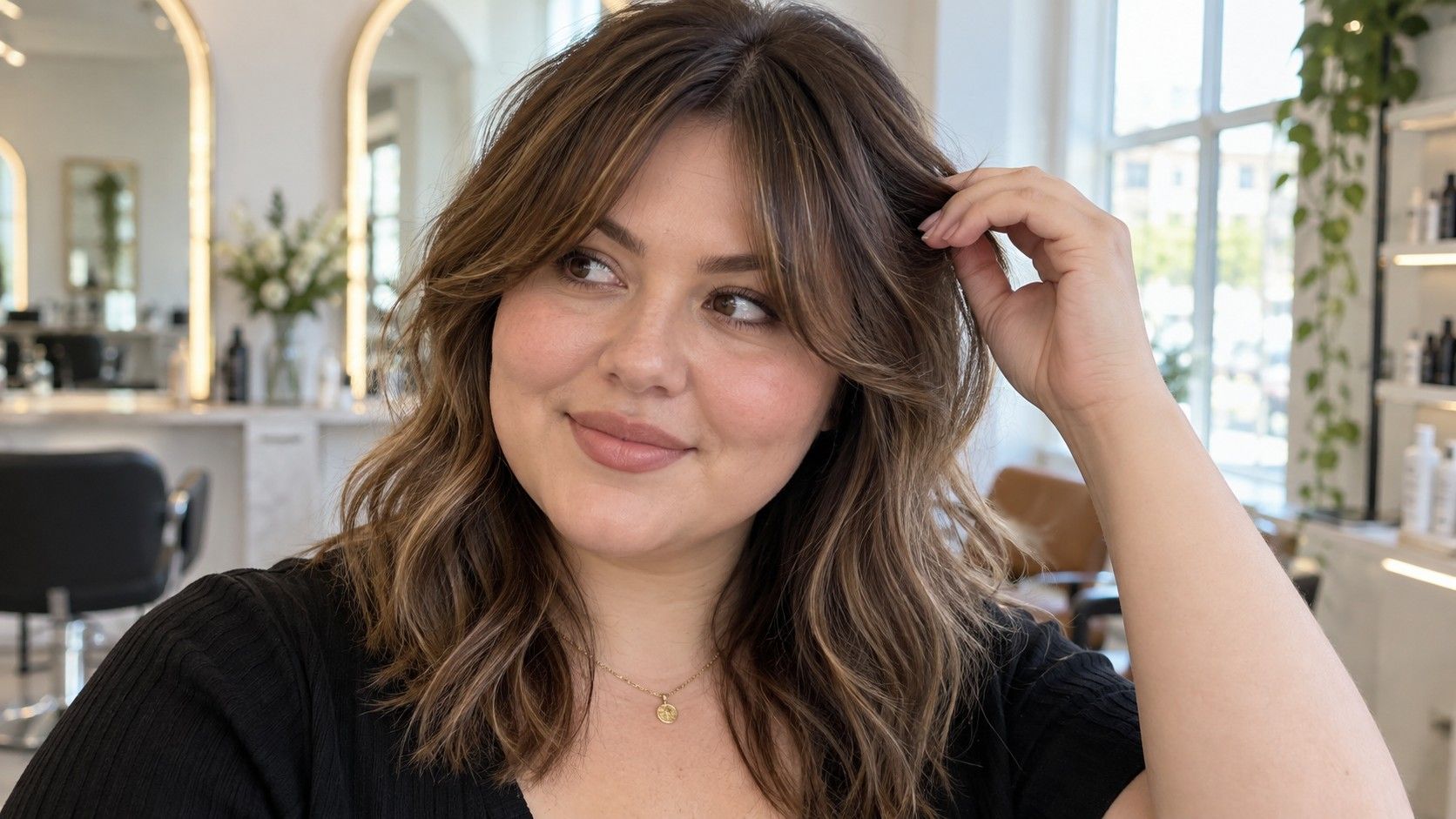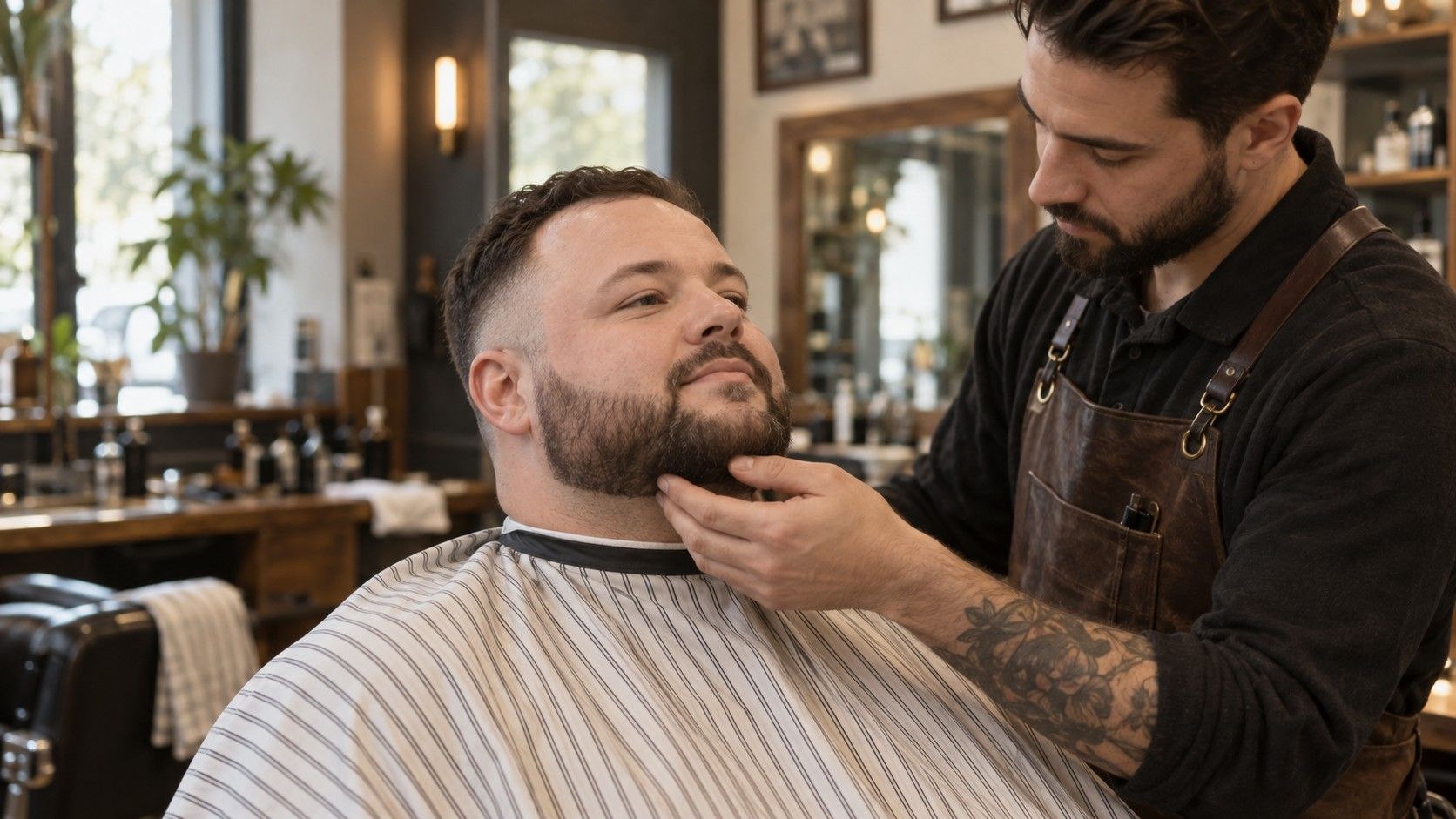
Round and square faces can both look relatively broad, and both can have full cheeks. The more useful difference is usually lower down: a round outline curves inward toward the chin, while a square outline has a more noticeable corner and a broader, straighter-looking jaw. A round vs square face comparison works best when you look at that change of direction, then check it against the rest of the face.
Uncover the jaw before deciding which shape you see
Move hair away from the sides of the face and look straight into a mirror with your head level. A bob that turns inward at jaw height can create a curved outline of its own; long straight pieces can hide the very corner you need to compare. Tuck them back temporarily. Take off wide earrings and glasses for the first assessment so the rim or drop does not become part of the silhouette.
Keep your expression relaxed and your teeth unclenched. A smile changes the cheeks, while clenching can make the area around the jaw corners look more prominent. Choose soft, even light. A strong overhead light may place a dark edge under the jaw and make it seem sharper than it appears during ordinary conversation. Check a second view by a window if the first is difficult to read.
A beard changes the visible lower boundary. A squared beard can make a curved jaw look angular; rounded trimming can soften a corner. If you have an older clear photograph without facial hair, it can help with the underlying outline. For present-day styling, however, consider the beard shape you intend to keep. Your glasses or haircut will be seen with that outline, rather than with an imagined bare jaw.
Look for the turn below the ear
Follow each side from the cheek toward the back of the lower jaw, then toward the chin. A square impression often comes from a noticeable turn near the jaw corner and a lower edge that looks fairly straight before reaching the chin. A round impression comes from a smoother transition, with the outline gradually curving inward. Neither requires a perfectly straight line or a mathematically circular curve.
Compare jaw width with cheek width. On a square-looking face, the jaw may appear relatively broad beside the cheek area, giving the upper and lower sides a more parallel appearance. On a round-looking face, the widest visible point is often around the cheeks and the lower outline narrows in a curve. Forehead width adds context, but hairlines vary too much to use as the only deciding feature.
Inspect both sides, then step back from the mirror. Close inspection can turn small shadows and normal asymmetry into exaggerated “corners.” The overall outline should remain recognizable at a comfortable viewing distance. If only one side appears angular, adjust your head so it is facing forward and check the light. Do not force the other side to match before deciding what the larger pattern suggests.
Use proportions to check the first impression
Length-to-width comparison can tell you whether either label is a useful starting point, but it cannot reliably separate round from square by itself. Both categories are often used for faces that look relatively compact. A face that is clearly longer than it is wide may be closer to oval or rectangular, even when it has soft cheeks or a noticeable jaw corner. The outline and the proportions need to agree.
| Feature | Round-leaning impression | Square-leaning impression |
|---|---|---|
| Cheek-to-jaw transition | A gradual inward curve | A more distinct change of direction |
| Lower jaw | A rounded boundary toward the chin | A broad boundary with straighter-looking sections |
| Width distribution | Often concentrated at the cheeks | Jaw width often remains visually substantial |
| Overall proportions | Relatively compact, with soft outline changes | Relatively compact, with more angular outline changes |
If you measure, keep the method consistent. Compare the central hairline-to-chin distance with the widest cheek-to-cheek distance on a straight-on image. Do not include a high hairstyle in the length or measure around the curved skin with a tape for one dimension and use a flat photograph for the other. Small measurement differences are easy to create this way.
A ratio cannot tell you what the jaw looks like. Two faces can have similar measured length and width but very different lower outlines. Write down the observation behind the number: “broad cheeks with a rounded lower edge” or “similar cheek and jaw width with visible corners.” Those descriptions remain useful even if a shape chart gives a different name.
Separate a soft surface from an angular outline
Soft cheeks do not exclude a square face. The cheek area can look rounded while the jaw underneath it still turns at a visible angle. Equally, a round face can have a clearly defined edge under good lighting. Definition describes how visible an edge is; shape describes where that edge goes. Confusing the two is one reason people alternate between labels in different photographs.
Skin, facial hair, expression and the way light falls all affect how the boundary appears. You cannot determine someone's body weight, health or habits from a face-shape label, and those judgments are unnecessary for choosing a style. Work with the outline you can see today. There is no need to predict how it might look after a change in weight or to treat a styling category as a body goal.
Check for makeup that draws a different boundary. A dark contour beneath the cheekbones can sharpen the middle of the face without changing the jaw corner. Shading along the jaw may make a lower edge look narrower in a photograph. If the purpose is to understand your natural outline, compare a plain, evenly lit view as well. If the purpose is to choose an evening hairstyle, your usual makeup can be part of the finished look.
Allow a mixed result when the features disagree
You might have a gently curved forehead, full cheeks and a broad jaw with modest corners. “Soft square” can describe that combination. Someone else may have cheek-led width and a curved jaw with a slightly squared chin; “round with an angular chin” may be clearer. These are everyday styling descriptions, not standardized diagnoses with a single pass-or-fail test.
Choose the description that helps you communicate the relevant feature. At a haircut appointment, “I like the jawline to stay visible” gives more direction than arguing over a category. During a frame fitting, “these lower rims sit too close to my cheeks” identifies a practical problem. A mixed result becomes useful once you connect it to a choice, rather than trying to win a comparison with a silhouette drawing.
Try two reference photographs taken with similar hair placement and a neutral expression. If your outline looks round in a close selfie and square in a distant photograph, repeat the comparison at a consistent camera distance and height. Phone filters may narrow the lower face or soften corners, so switch them off. A single flattering or unflattering angle is a weak basis for assigning a lasting label.
Do not rely on a celebrity resemblance to resolve the result. Public photographs involve different lenses, makeup, expressions and editing. Even when two people share a broad shape label, the position of their cheeks and length of their chin can differ. A reference picture is most helpful when it shows a haircut or frame you want to discuss, with a specific detail you can point to.
Choose the effect you want before choosing a style
Both round and square outlines can suit curved or angular styling. The question is whether you want to repeat the lines you already have, introduce a contrast, or keep the overall impression quiet. Straight-edged frames can emphasize structure on either outline; a rounded rim can echo a soft curve or sit in contrast to an angular jaw. There is no requirement to “correct” one with the opposite.
For hair, compare where the cut places its strongest line. A blunt edge near the jaw draws attention there, while longer pieces may carry the eye below it. Texture changes the result: curls can create width and movement at a different point from straight hair cut to the same length. Ask a stylist where the finished shape will sit when your hair dries naturally, especially if you prefer minimal styling.
For glasses, settle comfort and size first. The bridge should support the frame, temples should avoid uncomfortable pressure, and the lenses should sit in an appropriate position for your prescription. Check whether the lower rims touch your cheeks when you smile. Those checks apply regardless of whether the shape chart calls your face round, square or somewhere between.
Then compare two or three options under the same light and from the same distance. Keep one variable steady when possible: similar frame width with a different rim shape, or a similar haircut length with a different finish. Notice which choice expresses your taste and works with your daily routine. A useful face-shape description makes that comparison easier; it does not make the decision for you.