Going short can change your routine more than your reflection suggests. A crop leaves less hair to dry, yet its fringe, temples and nape may ask for more precise attention. When choosing short hair for round faces, I would compare the exposed outline, natural growth and upkeep first, then use face shape as a useful description rather than a restriction.
Choose how much of the outline you want to reveal
Short hair exposes details that longer lengths may cover: the temples, ears, nape and the way the fringe meets the forehead. A pixie with a long top can feel very different from a close crop, even if both are labelled short. Decide which areas you want open and which you would like to keep covered before focusing on the haircut name.
For a quick comparison, pull your hair back loosely and leave a small section across the forehead. Then tuck that section away. This will not show the volume or texture of a finished crop, but it can help you notice whether you enjoy an open forehead or prefer movement there. Check the side view too, particularly if the nape shape matters to you.
I would save separate reference photographs for the front, side and back. One image rarely explains all three. A front view may hide shaved sides; a side view may disguise a fringe that falls into the eyes. Tell the stylist exactly which detail you like in each picture. There is no need for every photograph to feature a person with a round face.
Compare a pixie, a crop and a longer short cut
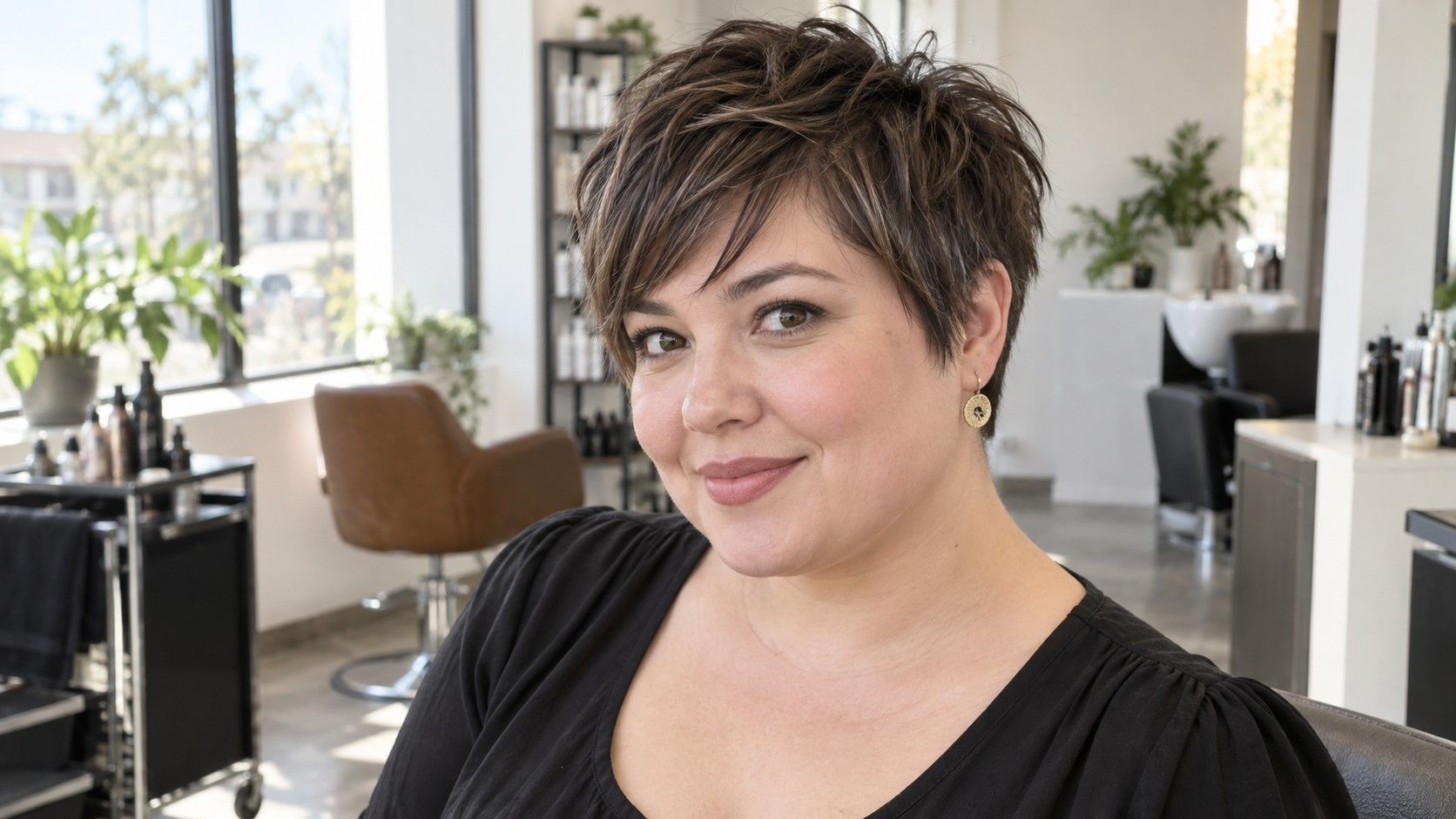
Short hair for round faces does not have to create height or disguise width. A rounded crop can echo the face outline deliberately, while a longer fringe can add a diagonal line. A sharp temple detail may appeal more than either effect. Choose the overall impression you want, then ask whether your density and growth direction support it.
| Shape | What it leaves available | What to check before cutting |
|---|---|---|
| Long-top pixie | A fringe to sweep or lift | Whether the top collapses or separates at the part |
| Close crop | An open forehead and clear outline | Cowlicks, scalp visibility and preferred edge finish |
| Soft textured crop | Small pieces around the fringe and ears | Whether the texture appears naturally or needs styling |
| Long pixie | More coverage at the temples and nape | How it behaves behind the ears and under glasses |
| Very short bob | A continuous perimeter with more length at the sides | Where the edge meets the jaw and whether it tucks |
The distinction matters during a consultation. “Short, but still tuckable behind the ear” sets a different limit from “leave the ear fully visible.” Point to the required length on your own head and ask to see it dry before the final refinement. The word pixie alone does not settle that detail.
Set the fringe and temple lengths together
A fringe is often the most adjustable part of a short cut. A sweeping piece creates movement across the forehead; a short broken fringe leaves more of it visible. A fuller straight fringe makes a more definite horizontal edge. None is automatically wrong for a round face, but each changes the amount of open space around the eyes.
Think about what the fringe must do on a normal day. If you need it out of your eyes at work, show the stylist where it becomes irritating. If you dislike clips, do not rely on clipping it back during the grow-out. Hair can sit higher after drying, so agree on whether the proposed length is being judged wet or dry.
The temple pieces should be considered at the same time. A longer fringe paired with very short temples has a different balance from soft pieces left beside the ears. Put on your everyday glasses during the final check. The arms can push hair outwards or leave a gap that does not appear in the salon mirror without them.
Ask how the sections join when the hair is worn forward, swept aside and tucked. You may only use one finish most days, but seeing the alternatives helps reveal an awkward jump in length. If you have strong growth at the front, a slightly longer fringe may behave more predictably than a very short one; the stylist should assess that on your hair.
Let the growth pattern influence the shortest areas
With a crop, small changes in length can make a cowlick more noticeable. Hair at the crown may rise when cut short, while a front section may divide along its usual line. Describe what your hair does after washing and after sleeping on it. A photograph of your ordinary morning hair can be more useful than a carefully styled reference.
Ask the stylist to examine the crown and nape before deciding how closely to cut them. Some growth patterns settle with enough length to weigh the hair down; others are easier to incorporate into a deliberately textured finish. There is no single threshold that works for everyone. Cutting progressively gives you room to assess the shape instead of assuming that shorter will automatically be simpler.
Curly hair needs an equally specific conversation about where each section will rest when dry. A fringe may spring up, and a dense side section may project away from the head. Discuss whether the cut will be assessed in natural curls or in a stretched finish. If you alternate between them, explain which appearance takes priority.
At the nape, choose whether you prefer a soft edge or a more defined line. Consider collars, necklaces and how often you want the edge tidied. A neat outline can be appealing, but it also makes fresh growth easier to notice. That is a maintenance choice, not a requirement attached to your face shape.
Find a finish you can repeat without stiff height
Short hair can dry quickly and still need attention in awkward places. Rather than planning a tall crown because an advice list recommends it, decide whether you enjoy that silhouette. A smooth crop, a loose fringe and a lightly lifted top can all work. The useful test is whether you like the shape once you stop arranging it.
Ask for a demonstration using a small amount of product. Too much wax or paste can gather fine hair into heavy pieces; a very light product may do little for dense or resistant hair. The amount and placement matter as much as the label. Begin with less than you think you need and add a little only where the finish requires it.
Watch the direction of drying at the roots. A fringe trained forward behaves differently from one dried across the forehead. If a section has dried into an unwanted bend, adding more product may make it heavier without changing the direction. Re-dampening that small area and drying it again may be the more practical reset.
Check the finished cut after moving your head and putting your glasses back on. Run your fingers through it once. If the look disappears immediately, ask for a less arranged version before leaving. You need to understand the everyday shape as well as the salon finish, particularly if you prefer air-drying or use very few styling products.
Plan the next trim and the possible grow-out
The shorter the outline, the more visible a small amount of growth can become. Your preferred appointment interval depends on how crisp you want the ears and nape to stay, how fast your hair seems to lose its shape and your budget. Ask the salon for a realistic range based on the exact cut, rather than assuming every pixie needs the same schedule.
Before committing to very short sides, ask what the first stage of growing them out may look like. A long top with closely cut sides can need a different transition from an evenly textured crop. Keeping a little extra length in one area may preserve more options, although it will also change the initial result. Decide which trade-off you prefer.
If you are nervous about a large change, choose a staged route with clear stopping points. You might try a longer short cut first, then return for a closer version after wearing it at home. This costs time and possibly another appointment, but it lets you assess the exposed outline, daily styling and comfort before removing more length.
After two or three ordinary washes, note what works and what interrupts your routine. Perhaps the fringe falls into your eyes, one temple flicks out, or the nape feels untidy sooner than expected. Bring those observations to the next appointment. They help turn a broad request for short hair into a cut shaped around your habits and preferences.